



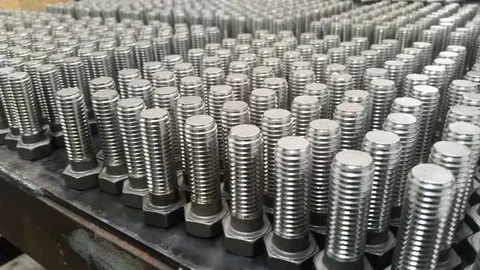
Industrial bolts are essential components in construction, manufacturing, and heavy machinery. Choosing the right bolt material can significantly impact durability, strength, and overall project performance. In this guide, we explore the journey from steel to titanium, helping you understand the options available for industrial applications.
Understanding Industrial Bolts
Industrial bolts are threaded fasteners used to secure two or more components together. They come in various sizes, grades, and materials, each suited for specific environments. While steel bolts have been the industry standard for decades, advancements in metallurgy have introduced alternatives like titanium that offer superior properties for specialized applications.
Steel Bolts: The Traditional Choice
Steel is the most commonly used material for industrial bolts. It offers excellent strength, durability, and cost-effectiveness. Carbon steel bolts are widely used in construction and machinery, while stainless steel provides added corrosion resistance. Steel bolts are ideal for general-purpose applications where high strength and affordability are critical.
Advantages of Steel Bolts
- High tensile strength
- Cost-effective and widely available
- Suitable for various industrial applications
Limitations
- Susceptible to corrosion without coatings
- Heavier than alternative materials like titanium
Titanium Bolts: The Modern Alternative
For industries requiring lightweight yet robust solutions, titanium bolts are increasingly popular. Titanium provides exceptional strength-to-weight ratio, corrosion resistance, and longevity, making it ideal for aerospace, marine, and chemical processing industries. While titanium bolts are more expensive than steel, their performance benefits often justify the investment.
Advantages of Titanium Bolts
- Exceptional corrosion resistance
- Lightweight and strong
- Long-lasting in harsh environments
Limitations
- Higher cost compared to steel
- Requires specialized tools for installation
Choosing the Right Bolt Material
When selecting between steel and titanium bolts, consider factors such as environmental conditions, load requirements, and budget constraints. For most standard industrial applications, steel bolts provide sufficient strength and durability. However, for high-performance or corrosive environments, moving from steel to titanium can significantly enhance reliability and lifespan.
Conclusion
The evolution from steel to titanium represents a major shift in industrial fasteners, offering engineers and builders more options than ever. By understanding the advantages and limitations of each material, you can make informed decisions to ensure structural integrity and long-term performance in your projects. Whether you stick with traditional steel or upgrade to titanium, choosing the right industrial bolt is crucial for success.
