



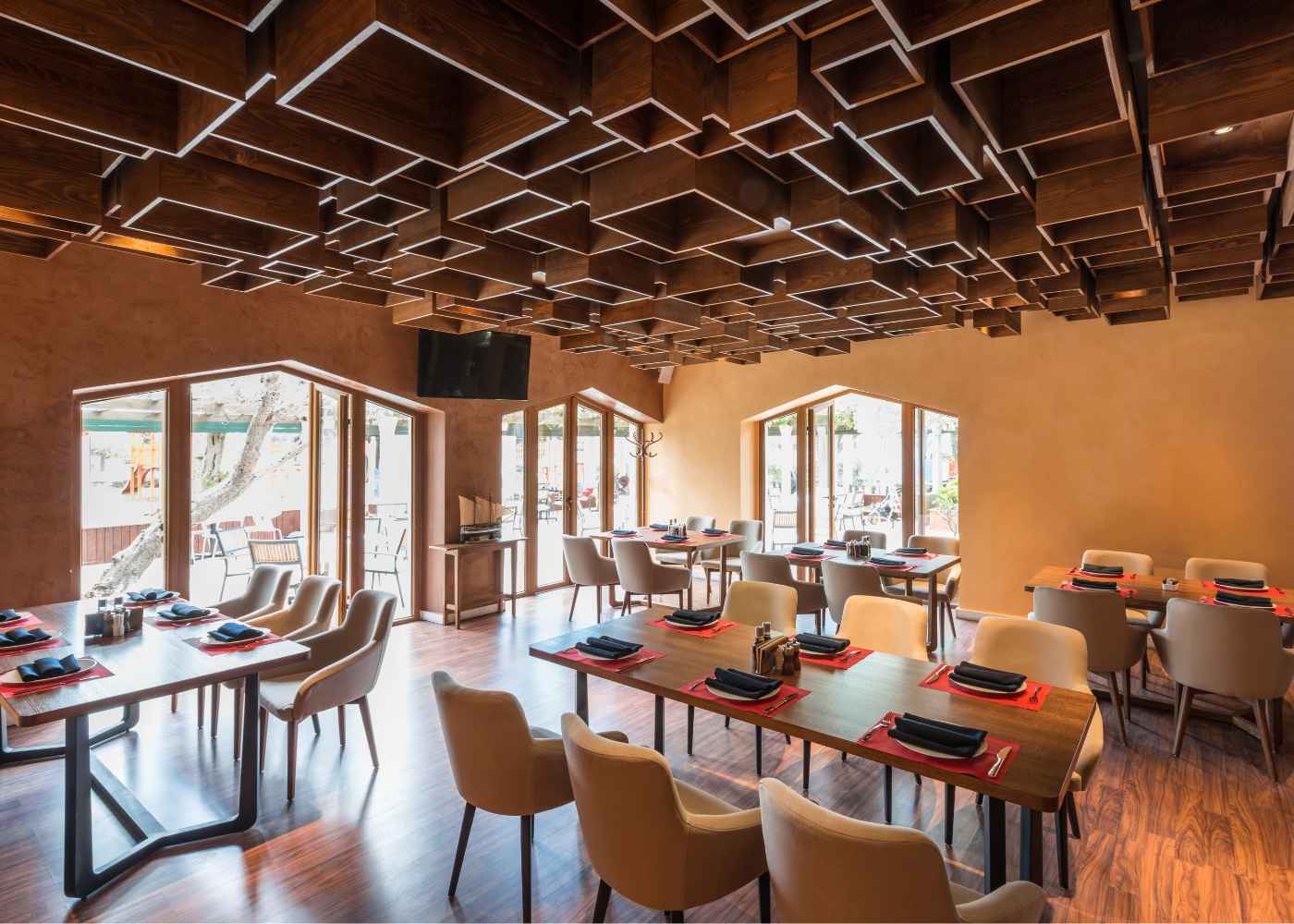
A restaurant can serve excellent food and still watch people walk past the door. The gap between a full room and a quiet one is often not the menu at all. It is everything a passerby takes in during the few seconds before deciding whether to stop.
Tenant improvements are how operators close that gap. Done well, they are not decoration. They are a revenue decision with a payback an owner can actually measure.
Rethinking What the Storefront Says
The facade does the first round of selling, and it does it without a word. Foot traffic reads the entry, the glazing, the signage, and the general sense of whether a place looks open and cared for.
Older storefronts often hide the dining room behind small windows or heavy tint. Opening that up changes the math entirely, because a room that looks lively from the sidewalk sells itself to everyone who passes. An awning, a repositioned entry, or brighter exterior lighting all pull in the same direction.
Signage deserves particular attention along dense corridors where every neighboring business is competing for the same glance.
Expanding Into Outdoor Seating
Patio seating carries the clearest revenue math in the whole category. Added covers generate added sales, and outdoor space usually costs far less per seat to build out than interior space does.
Southern California makes this especially attractive, since the usable season runs close to year-round. Shade structures and radiant heating stretch those hours further still.
The complication is regulatory rather than structural. Outdoor dining touches accessibility requirements, egress paths, and local permitting in ways that surprise owners who assumed they could simply set out tables. This is the point where the choice of contractor stops being a line item and becomes a schedule risk. Firms such as Slaten, which handles restaurant tenant improvement work in Los Angeles and other markets, put as much effort into navigating municipal approvals as into the build itself, and that experience is often what keeps an opening date from slipping.
Upgrading the Lighting Plan
Lighting is the least expensive high-impact change most operators can make, and it is chronically underestimated.
A single flat layer of overhead light flattens a dining room and makes food look worse than it is. Layered lighting fixes that. Ambient light sets the general level while focused light over each table makes plates look the way the kitchen intended, and accent fixtures give the room a depth that one overhead layer never will.
Warm color temperature and dimming capability matter more than fixture cost. A room that can shift from bright at lunch to low and warm at dinner is effectively serving two markets in the same square footage.
There is a practical benefit as well. Efficient fixtures cut the electrical load, and in a business running on thin margins, a lower utility bill compounds quietly month after month.
Improving the Flow Behind the Scenes
Not every worthwhile upgrade is visible to guests, and some of the most profitable ones are not.
A kitchen laid out poorly caps how many covers a restaurant can turn on a busy night, no matter how many people are waiting for a table. Reworking the line or upgrading ventilation can raise throughput without adding a single seat, which is the rare improvement that increases capacity and comfort at the same time.
Restrooms belong in this conversation too. They are one of the few things guests judge harshly and then mention publicly, and they are frequently the last item on a renovation list.
Measuring the Return on the Investment
The hidden cost of any improvement is the time the doors stay closed. A project that runs weeks past schedule can erase the gain it was meant to produce.
Value engineering exists to address exactly this. Reviewing the design early for cost savings and sequencing the work to shorten the closure both protect the return before demolition day ever arrives.
Material selection plays into it as well, since finishes that fail under heavy traffic turn into a second project sooner than anyone budgeted for.
Approached this way, an upgrade stops being an expense to justify at the end of the year. It becomes the reason the room is full.
