



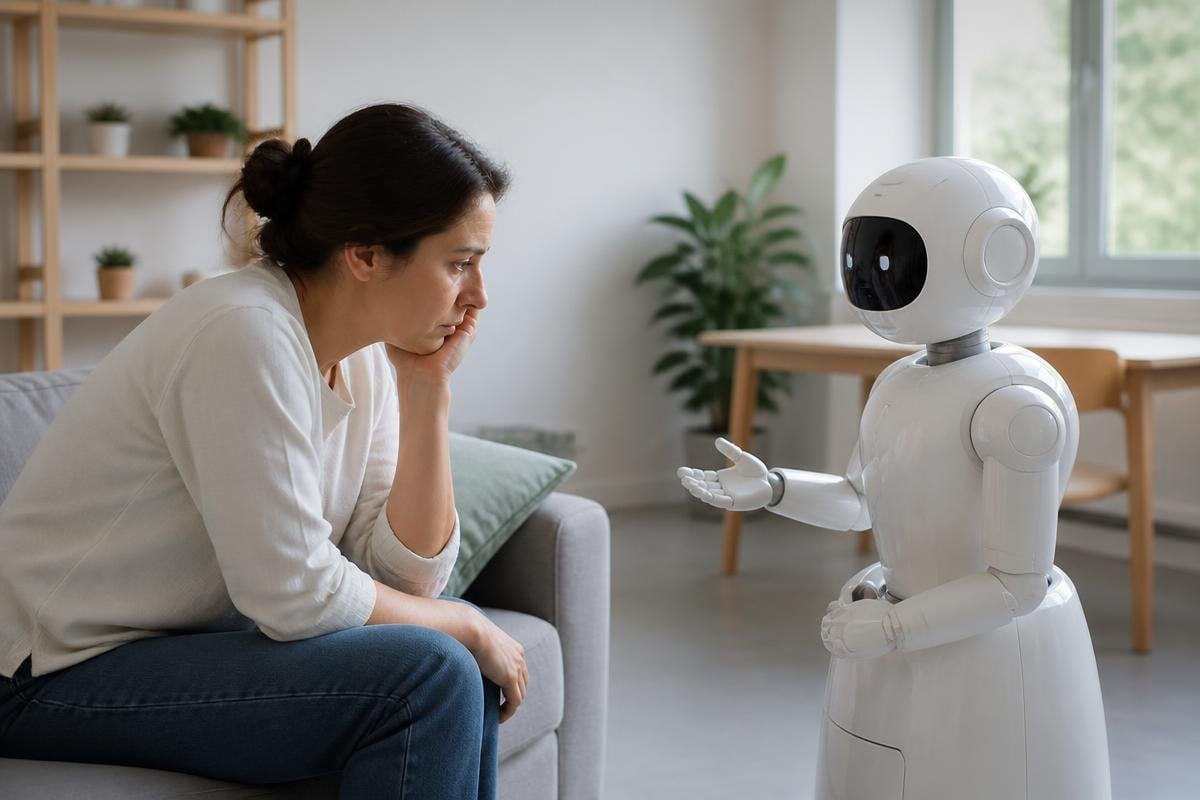
A robot can change how you feel without feeling anything itself. A camera can read your face, a microphone can track your voice, and software can choose a softer reply when you sound upset.
If you work with care robots, service machines, or social robots, the useful question is where helpful response ends and emotional control begins.
Quick read
- Robots can read signals such as voice tone, facial movement, and body position.
- A friendly voice or human-like face can change how people judge a machine.
- Clear consent, visible limits, and human review reduce the risk of pressure.
How a robot reads emotion
Robots do not read feelings directly. They read physical signs linked to feelings, then match those signs to patterns in their software.
A camera may track a smile, a lowered head, or a person looking away. A microphone can measure speech speed, volume, and pauses.
Touch sensors may detect how firmly someone holds a robot’s hand. Each signal gives the robot a partial view, not a private look inside the person’s mind.
That limit matters. The same quiet voice can mean sadness, tiredness, fear, or a person speaking in a second language. If a robot treats one guess as fact, its response can cause harm instead of help.
The robot may then change its behavior. It can slow its speech, move closer, repeat an instruction, or call a human worker. Those actions can calm someone, but they can also steer that person toward a choice.
Why the machine can affect you
People react to signals before they inspect the hardware behind them. Eye movement, pauses in speech, a head turn, and a warm voice can make a machine seem attentive. The effect can grow when the robot remembers a person’s name, routine, or past answers.
That response creates a trust problem. A person may tell a robot something private because the machine sounds patient. They may also accept advice more quickly when the robot appears worried, pleased, or disappointed.
The robot has no feelings to reveal. Its expressions come from programmed rules, trained models, or a remote operator. The response can still change a person’s mood and choice, which makes the design matter more than the machine’s inner life.
A social robot can change a person’s choice through its words, face, timing, or tone. A report from Robot24 can name the system, test setting, and recorded response, giving you facts to check before a helpful prompt becomes emotional pressure.
Helpful response or emotional pressure
The line depends on purpose, disclosure, and choice. A care robot that notices distress and contacts a nurse gives a person more support. A sales robot that detects hesitation and changes its pitch pushes in the other direction.
The same voice feature can serve either use. A calm tone may help a patient follow a treatment step. It may also hide uncertainty and make a wrong instruction sound safe.
I’d treat any robot that claims to understand feelings as a guess-making system, not a mind reader.
People also need to know who receives the data. Face scans, voice recordings, touch data, and conversation history can reveal more than a person expects. The system should state what it records, how long it keeps the data, and who can review it.
A practical check before deployment
Use this list before placing an emotion-aware robot near customers, patients, students, or staff:
- Name the signal: tell people whether the system reads voice, images, movement, touch, or stored conversation.
- Show the limit: label emotional readings as estimates and give a way to correct them.
- Keep a human path: let a person ask for human help without arguing with the robot.
- Test pressure points: check whether the robot changes its words after hesitation, fear, anger, or refusal.
- Set data rules: define storage time, access rights, deletion steps, and permission before recording.
- Review the outcome: measure missed warnings, false readings, complaints, and human handoffs.
These checks turn a vague ethics concern into a system review. They also give operators a way to find harm before the robot reaches a larger group.
What happens next
Emotion-aware robots will keep getting better at reading signals. The safer path is to keep their claims smaller than their sales pitch: they can detect patterns, suggest a response, and ask for human help. They cannot prove what a person feels.
That boundary should appear on the screen, in the voice prompt, and in the operating rules before the first interaction begins.
