



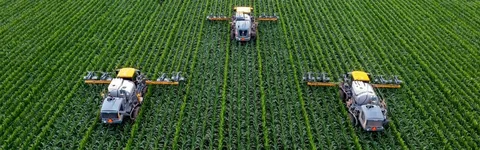
In recent years, the agricultural industry has witnessed a groundbreaking shift thanks to advancements in technology. Among these innovations, precision agriculture stands out as one of the most transformative forces. This method utilizes data-driven approaches and modern technologies to optimize the efficiency of crop management. By focusing on the specific needs of crops and managing resources more effectively, precision agriculture is revolutionizing how farmers approach crop production.
What is Precision Agriculture?
Precision agriculture refers to the practice of using technology to monitor, manage, and optimize field-level crop production. This involves collecting data on soil conditions, weather patterns, crop health, and other factors that influence growth. With tools like GPS, drones, sensors, and satellite imagery, farmers can gain real-time insights into the conditions of their crops and soil.
The goal of precision agriculture is to apply the right amount of water, nutrients, and pesticides at the right time, and in the right place. By doing so, farmers can reduce waste, increase yields, and improve sustainability. This data-driven approach allows for more informed decision-making, enabling farmers to manage their crops with greater accuracy and efficiency.
How Precision Agriculture is Changing Crop Management
1. Improved Efficiency and Productivity
One of the most significant impacts of precision agriculture is its ability to enhance crop management efficiency. Traditional farming often relies on blanket applications of water, fertilizers, and pesticides across entire fields, regardless of the actual needs of specific areas. This can lead to overuse of resources, increased costs, and even environmental harm.
With precision agriculture, farmers can map their fields and identify areas that require more or less of certain inputs. For instance, soil moisture sensors can detect dry patches in a field, prompting targeted irrigation. Similarly, nutrient management tools allow for the application of fertilizers only where needed, reducing both costs and environmental impact. This tailored approach leads to higher productivity while minimizing waste.
2. Enhancing Sustainability
Another critical benefit of precision agriculture is its positive impact on sustainability. With the ability to monitor crop health and soil conditions in real time, farmers can make more informed decisions that lead to less environmental degradation. For example, precise irrigation techniques can conserve water by delivering the right amount directly to the root zone, rather than overwatering large areas.
Moreover, by applying fertilizers and pesticides more precisely, farmers reduce the chances of runoff into nearby water sources, helping to protect local ecosystems. This sustainable approach to crop management ensures that farming can continue to meet the needs of a growing global population without further damaging the environment.
3. Increased Data-Driven Decision Making
The shift toward precision agriculture is driven by the vast amounts of data it generates. With the help of advanced tools like drones, satellite imagery, and ground sensors, farmers are able to gather valuable insights about their crops. These technologies provide real-time data on crop health, pest infestations, soil conditions, and much more.
Farmers can analyze this data to make better decisions on when to plant, irrigate, fertilize, or harvest. Furthermore, predictive analytics can help anticipate potential problems before they arise, such as pest outbreaks or nutrient deficiencies. By relying on data rather than intuition alone, farmers can manage their crops more proactively, leading to healthier crops and higher yields.
4. Cost Reduction and Increased Profitability
By implementing precision agriculture, farmers can reduce unnecessary costs associated with traditional farming practices. With more precise inputs, farmers save money on water, fertilizer, pesticides, and fuel. Since precision agriculture focuses on minimizing waste, it not only makes farming more cost-effective but also increases profitability.
For example, using GPS-guided machinery can reduce overlap in planting, seeding, or spraying, which leads to savings in fuel and labor. Additionally, by optimizing resource use, farmers can achieve higher yields with fewer inputs, further boosting profitability.
Future of Crop Management with Precision Agriculture
The future of crop management is undoubtedly intertwined with precision agriculture. As technology continues to advance, tools like artificial intelligence, machine learning, and advanced robotics will become even more integrated into farming practices. These innovations will further enhance the capabilities of precision agriculture, enabling farmers to manage their crops more effectively and efficiently.
For example, AI-powered systems could help analyze vast amounts of agricultural data in real-time, providing farmers with instant insights and recommendations. Autonomous tractors and drones may take over many of the labor-intensive tasks, reducing the need for manual labor and increasing operational efficiency.
Conclusion
Precision agriculture is transforming crop management by providing farmers with the tools and knowledge to optimize their operations. With benefits like increased efficiency, sustainability, and data-driven decision-making, it’s clear that this technology will play a pivotal role in the future of farming.
